Proud Parents' Guide Helps Kids Play , Learn & Thrive

Proud Parents' Guide Helps Kids Become Winners in School, Sports & Life


What is Proud Parents' Guide?

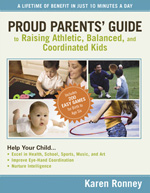
Proud Parents' Guide is a comprehensive plan to develop coordination, balance, brain development, body control and athleticism in children from birth to age six in only 10 minutes a day. It’s a step-by-step handbook with over 200 games and activities that will help kids have fun and succeed in sports and life.

How do you play? 

Simple games can be played indoors and outdoors to teach gross motor movement such as running, jumping, kicking, hopping, lunging, leaping and skipping. Babies, toddlers, preschoolers and elementary-aged kids will also learn fine motor skills including right and left-handed coordination, finger control, grasping and gripping objects, and throwing, catching and hitting balls. Academic applications include holding a pencil, cutting with scissors and drawing. Life skills are manipulating buttons, zippers and shoelaces.

Why Was This Parenting Book Written?

After 25 years of coaching, I have observed many kids entering the world of youth sports missing basic fine and gross motor skills. To correct this, I created games with the help of physical and occupational therapists to fill those develomental gaps. Now this plan is available to all parents, coaches and educators.


.

What supplies do you need?

This program is easy because it uses common household items such as rope, chalk, balloons, bubbles, soda bottles, trash cans, chairs, tables, pillows, toys, towels, blankets, beads, necklaces, paper plates, buckets, small sticks and laundry baskets. It also uses basic sports equipment like inexpensive balls (playground, soccer, football and tennis), hula hoops, child-sized tennis racquets, golf clubs and bats. The activites are perfect for the home or classroom, and  backyards, parks and playgrounds.

How early can you start playing Proud Parent's Guide games with your child?

Start playing games at birth or as early as possible. Kids need to get hooked on being active in the first 10 years of life to develop to their full potential in academics, athletics, artistic, musical and creative pursuits. Why? The process  of overall brain development, coordination and talent is a slow building process.

Kids who start ahead, stay ahead!! 


How much time do kids really exercise?

Not as much as you would think

Perhaps parents assume  coordination will develop naturally through childhood play as it did in previous generations, but times have changed. Now fewer kids play neighborhood pick-up sports games in their front yards or ride their bikes as a way to pass time. As a result, the responsibility of teaching children how to skip, kick, hop, run, jump, and hit, catch and throw balls often falls on the shoulders of elementary school physical education teachers or volunteer youth sports coaches, who usually have an average of 1 or 2 hours a week to help kids.

A Real-Life Sports Scenario

Here is a common youth sports scenario: A young boy or girl at age 7 signs up for a recreational soccer team. After a few weeks, parents hope that their child can skillfully dribble the ball down the field, pass the ball with the instep of the foot, shoot on the goal with power or toss an overhead throw-in while balancing both feet on the ground. In addition, kids are expected to run for up to one hour without getting tired. What actually happens? Well, most kids struggle with some or all of those soccer skills. Toss in parents’ unrealized expectations that their children are not more “athletic” and it is a disappointing youth sports experience.

Now let’s take a look at the children who played games from my book as a form of family fun and athletic development. Those kids who joined the soccer team for 7-year-olds successfully displayed most of the previously listed skills on the first day of practice. As a result, they were perceived as “athletically talented.” But were they really “talented”? The truth is any child would appear talented after 7 years of playing physical coordination games, as opposed to one who received limited exposure to early developmental activities and a 7-day introductory crash course to the game of soccer.

Necessity Was the Inspiration

As an experienced professional sports coach and mother of three, I developed this collection of games to teach my own children basic fundamental skills to prepare them for athletics, academics and life. I also used these same games to coach other children who had impressive strengths but limiting physical weaknesses. Hence, the concept was born as a way to develop a child’s overall coordination while filling in the gaps of missing fundamental skills. When kids improve their balance, strength, flexibility, body awareness and overall coordination, the results include self-confidence and success in sports and life. So back to the original question, “Why was this book written?” There are two reasons. I believe all kids deserve the opportunity to have a fun and successful experience in youth sports. I also wanted to provide parents an easy plan to give their children that chance while making priceless family memories.

Fun Family Games: A Solution to Childhood Obesity

There has never been a greater need for physical fitness. In the past 25 years, the number of overweight children from birth to age 11 has more than doubled from 7 to 16 percent according to the Center for Disease Control. Kids are at risk for diabetes, heart disease, stroke, high blood pressure, sleep apnea and asthma. This book offers a solution to these alarming trends by improving overall athletic skills while stimulating young minds through fundamental fitness activities. Other health benefits include a strong heart, low blood pressure and healthy cholesterol levels.

Fitness and Education are Natural Partners

In 1985, the Cajon Valley Union School District in San Diego County published the results of a 5-year study on a children’s fitness program called “F.A.S.T” or Fitness, Academics and Self Esteem Training. Pete Saccone, an elementary school teacher who created F.A.S.T., encouraged kids from kindergarten through fifth grade to walk, jog or run the first 45 minutes of each school day. The goal was to promote cardiovascular fitness and respiratory efficiency while at the same time promoting mental, emotional and social health. At the end of the study, the children improved their academics and nutrition, became fitter, attended school more regularly and created fewer discipline problems.

The F.A.S.T. results dazzled school district leaders. The F.A.S.T. fourth graders raised their test scores over 16 percent in reading, language and math compared to a .5 percent gain for a controlled group of non-running students. A similar group of F.A.S.T. fifth-graders showed an academic improvement of over 12 percent while control group peers logged a mere 2.8 percent academic gain. Additionally, the F.A.S.T. participants experienced lower blood pressure, body-fat percentage and resting heart rates along with improved oxygen consumption.

Brain Development in Physically Fit Kids

Physical and mental activity help the brain create additional neuropath ways or mental navigational highways for future use. It is most prevalent in the first 10 years of life when the human body is growing and changing each day. The “window of opportunity” for learning gradually closes in the teen years. This explains why it is easier for children to learn a new sport or foreign language than it is for adults.

Why is the First Decade of Life Crucial?

Kids need to get hooked on sports within the first 5 to 10 years of life for the best chance of becoming athletic and maintaining a lifestyle of fitness. Why? The process of developing overall coordination essential to playing all sports unfolds over years of practice. It also builds self-esteem and the confidence to say no to negative influences. As a result, kids who play These games in the first decade of life have an excellent chance to become skilled youth sports participants, high school standouts or possibly college scholarship athletes. My book will help jumpstart development so kids can become quicker, stronger and faster at much earlier ages.

Kids Who Start Early Stay Ahead

The basis of the California Children and Families Act of 1998 was the springboard for the California First 5 program, which recognizes that all children prenatal to age 5 need early child development services as a foundation to be ready to “learn and realize the potential to become productive, well-adjusted members of society.” It was based on current research in brain development, which clearly indicates that the emotional, physical and intellectual environment that a child is exposed to in the early years of life has a profound impact on how the brain is organized. As a result, my book can serve as a supplement to the California First 5 program, as they both address the physical, emotional and intellectual experiences a child has with respect to parents and caregivers as significant influences that lead to a child’s success in later life.

This Program Works for Everyone

No experience is necessary to use this program. It can be applied by parents, grandparents, family members, friends, coaches and caregivers, any of whom can become a child’s first sports mentor. All it takes is desire and 10 minutes a day. is well-suited for both athletic adults and those with limited physical skills. Often times, adults with natural athletic abilities are too “natural,” meaning they can skillfully play sports but haven’t a clue how to teach them. Other adults are great competitors and coaches, but are limited to knowledge in one sport. In the case of the adult with a limited sports background, seeking coaching advice might be necessary. Also keep in mind that sports training techniques evolve over time, and it is important to stay current through coaching education books like mine.

Basic Equipment Does the Job

This is a cost-effective sports program because it utilizes common household items such as broomsticks, empty coffee cans, spoons, cups, laundry baskets, cotton balls and clothes pins. Other useful items include hula hoops, jump ropes, foam balls, balloons, bubbles and bean bags. Basic sports equipment requires items such as soccer, golf and tennis balls, wood or plastic bats, kid-sized tennis racquets, beach balls and chalk.

Ages and Stages

This book is divided by age, ability and skill level. The categories include the first 12 months, active babies (ages 1 to 2), transitional toddler (age 3), the preschool years (ages 4 to 5), elementary kids (ages 5 to 10) and advanced games.

Support from Medical Authorities

Dr. Allen D. Schwartz, the Head of Pediatrics for Scripps Mercy Hospital in San Diego, is a strong supporter of my book. A well-respected authority on health issues for children, Dr. Schwartz has agreed to be an editorial contributor to the book regarding the growing need for incorporating physical fitness activities into family lifestyles. Also Dr. Schwartz will be joined by Dr. Whitney Edwards, a Southern California pediatrician, who spearheads a program for in childhood and adolescent obesity. Dr. Edwards will add her expertise on special health and diet needs of the overweight athlete.

A Book in Bite-Sized Pieces

My book can be read from cover to cover the first time, and again at intervals as a refresher. It can also function as an instructional reference book for guidance in selecting quick and easy games because this plan is written in a simple format. It is a recipe for success that can give children the confidence to fulfill their athletic dreams.